
Planks But No Planks
Or Creating rituals, not routines

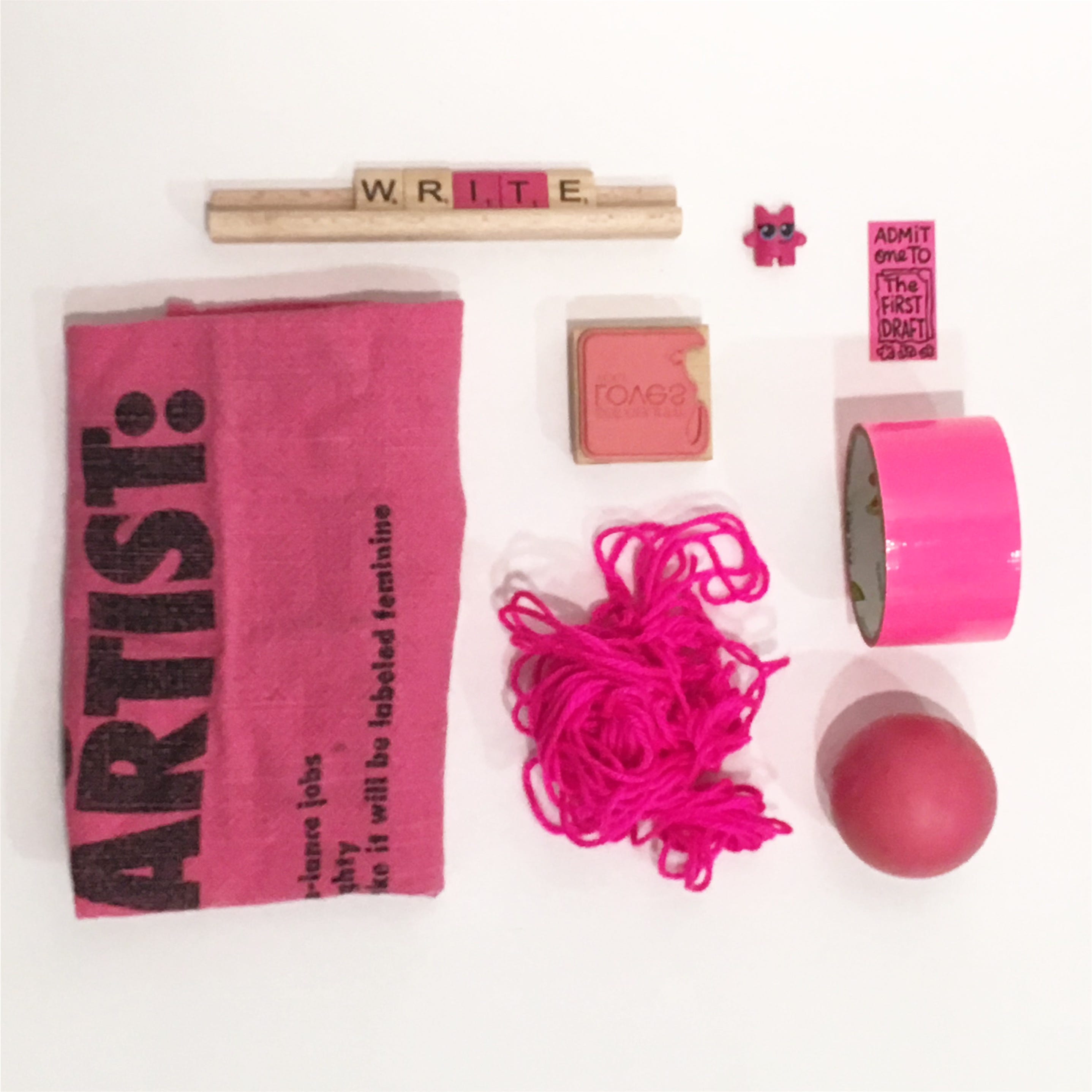
Sometime after the holiday mad-dash, I abandoned my commitment of doing a 90-second plank exercise first thing in the morning. This occurred without any ceremony from me—it was less a conscious decision as it was a casual, unselfconscious forgetfulness. Now it’s been more than a month since I’ve knelt down on the floor, set the timer, and held my body in a not-especially-comfortable position until the little chime went off and I returned to my regularly scheduled program of a second cup of coffee and breakfast.
Of course, there’s been no regularly scheduled program this first chaotic, outrage-inducing, and devastatingly sad first month of the year. But as the chaos and outrage and devastation itself only seems to keeps multiplying, this has shaken me more than anything else. The threat of desensitization born out of the roiling onslaught of terrible and terrifying news. This way we are—consciously or not—suiting up with our own armor to protect ourselves from losing it completely, steeling ourselves to face the next awful thing.
How awful that we must ready ourselves for more awfulness. How awful that this has become its own routine.
Beyond the work of improving and sustaining our productivity, practices embedded in consistent and ongoing effort help us stay accountable to our intentions. But they also help us get clear on our values. And what will truly nourish us. And how we will more sustainably nourish ourselves. When I discovered myself having fallen off the wagon of my daily plank, I saw this as an invitation to get curious about what was really mattering to me.
Spoiler alert: It’s not about the plank.
What I’ve discovered in this inquiry is that what began as a ritual became, too quickly, routine. I had been looking for a way to (re)connect with my body, something having to do with reminding myself of my own power. Of what I was capable of. For a few weeks, this looked like a 90-second plank; I’d get up after the timer chimed the final second and feel something resembling accomplishment, and this would be enough to carry me downstairs and into my day. But something fell apart these past six weeks—a confluence of internal need and external experience (perhaps an internal need that’s come as a result of external experience)—and that plank just couldn’t cover it. And so I see that what’s been happening outside was necessitating a call for a change inside.
In other words, the plank was merely a date. But what these terrifying times call for is devotion.
I’ve been following the months-long journey of a group of Buddhist monks, who have been traveling on foot from their temple in Texas to Washington, DC on what they are calling a Walk for Peace. They are scheduled to reach their destination in the next two weeks, and each day I check in on their progress via their supporting team’s Facebook updates. Aside from averaging between 20-30 miles a day, the monks also offer daily peace talks and spend many hours meeting those who have come to welcome them to their communities. To say that I have been deeply moved by their commitment—their devotion—is an understatement. I have been asking myself what my own devotion might look like now. What it is that I might be devoting myself to, or on behalf of. More specifically, the monks’ 2,300-mile trek has awoken a longing I didn’t have the words for but which I now can see so clearly is what has gone absent in the daily outrage and chaos: sacredness.
“Sacred” - Regarded with great respect and reverence. Worthy of awe. Secured by a sense of justice against any defamation, violation, or intrusion. The word is derived from the Latin “sacrare,” meaning “holy.”
Needless to say, the world lately has felt the opposite of sacred, enervated of holiness. And so perhaps I shouldn’t be surprised that something I’d initially engaged with as a ritual has destabilized, too. Has become directionless, empty of meaning and purpose and connection. A routine that doesn’t and cannot sustain but rather contributes to the numbness. And my goodness, I do not want to be numb. On January 19, I decided to do a walk of my own—from Belfast to Camden, Maine. 18 miles. And in the 12 days since I completed that walk, I’ve taken four more. I’ve spent hours putting one foot in front of the other in the biting cold of winter, bundled up to the gills. I’ve walked along the shoulders of a road I’ve driven on countless times over the past five years, a road I am only now getting to know intimately because I am on foot. Of course, I know these walks are not repairing the cataclysmic ruptures of the world. They are not Senate votes or new laws or impeachments or disarmaments or administration overhauls. They are not the earthquake of change I know so many of us are desperate for. But they are offering me an alternative map for what change can look like. They are returning me to contact with the earth and the air and the clouds and the weather. They are showing me how I can move forward even as the semis barrel down the highway, how to walk where the ice is thickest. And they are reminding me where my spirit still lives. Where it is, in fact, singing.
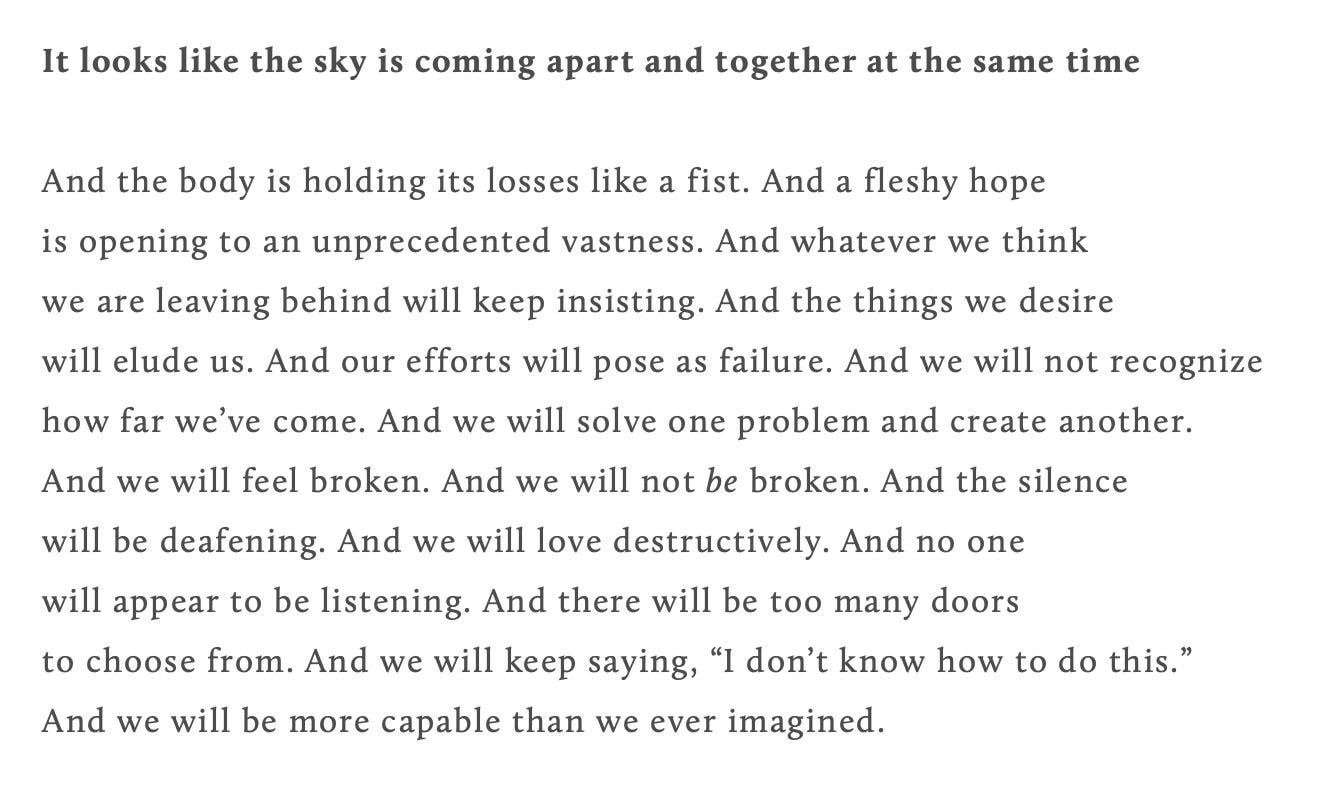
I just did a rewrite from your yesterday’s class, Hundred Words. The prompt was, “growing” I forwarded the rewrite to a friend. Then I listened to Adam Schiffs’ Substack report on Stephen Miller and I felt ashamed that I was writing about parsley instead of focusing on the horrors that have occurred and threatens to continue in our country. But after I read your piece, I reflected that perhaps writing about flourishing parsley is not a plank distraction but about the flourishing of love alongside grief and grieving. Thank you for your writing and all that you share and offer.
Just what I needed today. This Saturday Andy and I have been doing 5 minute movement snacks on every hour from oldscoolmoves and Cuan Coetzee and eight brocades qi gong, etc. Invitations to move a little differently and show up at close range.